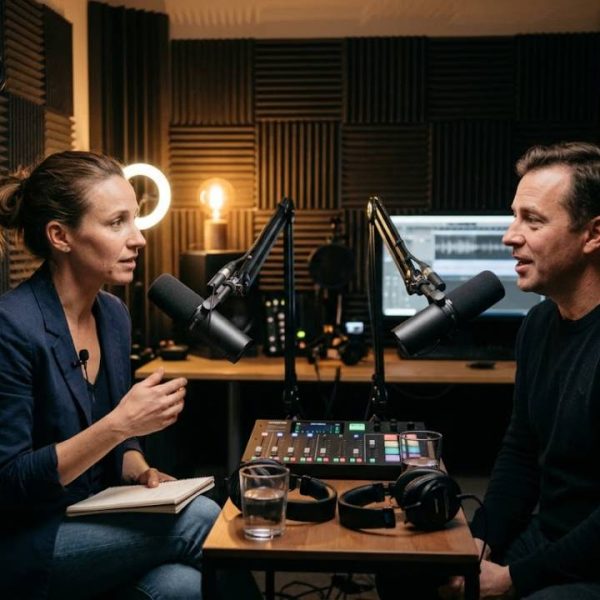
A well-written press release can win a headline. A good conversation can win a loyal audience. That is why more communication teams are moving toward podcasts, audio interviews and voice content as part of their public relations strategy. Spoken stories feel human, and people remember them.
This article looks at how audio supports brand reputation, how to plan it and how to make recordings useful far beyond the first listen.
Why audio works for reputation
Text tells people what a company says. Audio lets them hear how it thinks. Tone, pauses and honest answers show personality in a way no polished statement can. Listeners often spend twenty minutes or more with a single episode, which is rare attention in a crowded media environment.
Trust grows when audiences hear real people explain real decisions. A founder who answers difficult questions on a podcast usually gains more credibility than one who sends a carefully edited quote.
Choose the right format
There are several options. A branded podcast gives you control over topics and schedule. Guest appearances on established shows borrow an existing audience. Short audio statements work well for crisis updates or product news. Interviews with customers and partners add outside voices.
Match the format to your goal. If you want to explain complex ideas, choose long-form conversations. If you want quick reach, short clips for social platforms are easier to share.
Plan the story before you record
Even natural conversations need preparation. Define one main message and three supporting points. Prepare examples, figures and short stories that make the message concrete. Brief your guest on the questions and the tone.
Avoid reading from a script. Notes are fine, but listeners notice when a speaker is reciting. Aim for clarity, not perfection.
Technical basics that protect your image
Poor sound makes even great content hard to enjoy. Use a decent microphone, record in a quiet room and test levels before starting. Keep file backups and name them clearly.
Editing matters too. Remove long pauses and background noise, but keep the natural rhythm. Heavy cutting can make a conversation feel artificial.
Turn recordings into text
Each episode can feed many other pieces of content. A transcript becomes a blog article, a set of quotes for social media, a newsletter section and a searchable page that search engines can read. It also makes your content accessible to people who cannot or prefer not to listen.
If you publish regularly, professional services for MP3 and WAV transcription help you move from raw audio files to clean text quickly, with correct names, terms and timestamps.
Reach audiences in other languages
A strong episode does not need to stay in one market. Translating transcripts, show notes and summaries lets you reach listeners who prefer another language. Subtitled clips travel well on social platforms, where many people watch without sound.
For French-speaking audiences, a trusted partner offering French translation services can adapt not just the words but the tone, so that humour and examples feel natural to listeners in France, Belgium, Switzerland or Canada.
Measure what matters
Downloads are only a starting point. Look at listening time, completion rate, shares, newsletter sign-ups and mentions in the press. Track how audio content supports your wider goals, such as media coverage or lead generation.
Compare episodes to see which topics, guests and lengths perform best. Use those findings to guide the next season.
Protect your brand with clear guidelines
Public statements travel fast. Decide who may speak for the company, what topics require approval and how to handle sensitive questions. Make sure guests understand what is on the record.
Professional standards help here. The Public Relations Society of America, known as PRSA, publishes a code of ethics and practical resources for communicators who want to build credibility and handle public messages responsibly.
Common mistakes to avoid
The most frequent mistakes are launching without a clear audience, recording without a plan and publishing without a promotion strategy. Another is treating audio as a one-off campaign rather than a long-term relationship.
Consistency counts. A modest show that appears every two weeks usually does more for reputation than a polished season that disappears after three episodes.
Promote every episode
Publishing is not the same as promoting. Share clips, quotes and behind-the-scenes images across your channels. Send episodes to journalists and partners who may find them useful, and invite guests to share them with their own networks.
Add the episode to your website with a transcript, a short summary and links to related resources. This helps both readers and search engines understand the topic.
A simple starter plan
Pick one audience and one goal. Record three short episodes with clear topics. Publish them with transcripts. Share clips for two weeks. Review the results and adjust.
Small steps like these build a voice that audiences recognise and trust over time.